


 Back To Blog
Why We Naturally Seek Out a Quiet Office Phone Booth
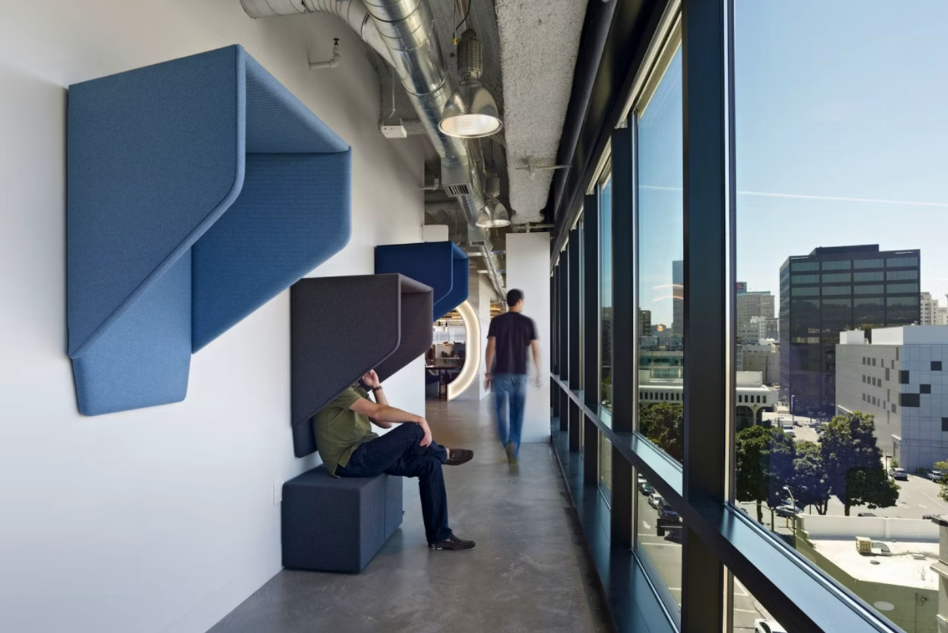
There is an interesting pattern that appears in almost every workplace. When employees need to concentrate, prepare for an important meeting, make a difficult phone call, or gather their thoughts, they instinctively look for somewhere quieter.
Sometimes it is an unused meeting room. Sometimes it is an empty corner of the office. Sometimes people even step into a corridor or outside the building simply to escape the surrounding activity.
This behaviour raises an interesting question. Why do we naturally seek out a quiet office phone booth or another quiet space when communicating or thinking? The answer has less to do with avoiding noise and more to do with how the human brain responds to its environment.
Why a Quiet Office Phone Booth Feels Like a Mental Reset
Modern workplaces are full of information competing for our attention. Conversations, movement, notifications, ringing phones, and visual activity all require the brain to process more than we often realise.
Even when we believe we are ignoring these distractions, our attention continues to monitor them in the background. This constant filtering requires mental effort.
Stepping into a quiet office phone booth changes that experience almost immediately. The environment signals that it is time to focus on one task rather than twenty. Instead of dividing attention between multiple competing demands, the brain can direct its energy towards the conversation or piece of work in front of it.
For many people, this feels like pressing a reset button.
Humans Naturally Seek Refuge
Throughout everyday life, people instinctively move between busy and quiet environments.
After spending time in a crowded restaurant, many people enjoy the calm of walking outside. During a busy family gathering, someone may briefly step into another room for a few moments of peace. Even in our own homes, we often choose different spaces depending on what we are trying to do. The workplace is no different.
When concentration or thoughtful communication becomes important, people naturally seek environments that offer a greater sense of control. This is not about avoiding colleagues. It is about finding a setting that better matches the task. A quiet office phone booth provides exactly that opportunity.
Why We Think More Clearly in Smaller Spaces
It might seem surprising, but many people find enclosed spaces easier to think in than large open environments.
This is partly because smaller spaces reduce the number of distractions competing for attention. There is less movement, less background activity, and fewer visual interruptions. The environment feels more predictable, allowing the mind to settle more quickly.
The result is not isolation but clarity. Rather than constantly scanning the surrounding office, employees can focus fully on the discussion, presentation, or task they are completing.
Better Communication Begins with Better Listening
Good conversations depend on more than speaking clearly. They also require people to listen carefully.
In busy offices, listening can become surprisingly demanding. Employees may find themselves filtering out nearby conversations while trying to concentrate on the person speaking. Video calls become harder to follow, and important details can easily be missed.
A quieter environment reduces this cognitive effort. Conversations become easier to follow because attention is directed towards the people involved rather than the surrounding workplace.
This benefits everyone, from employees having one-to-one meetings to clients participating in virtual calls.
Quiet Creates Confidence
One of the lesser recognised benefits of quiet environments is the confidence they create.
People often communicate differently when they know they are not competing with surrounding noise or worrying about disturbing colleagues. They ask more questions, explain ideas more fully, and speak with greater ease.
This is particularly noticeable during interviews, performance reviews, coaching sessions, presentations, and sensitive conversations where confidence plays an important role.
A quiet office phone booth provides more than acoustic comfort. It creates an environment where people feel able to communicate naturally.
Supporting Different Ways of Working
No two employees work in exactly the same way. Some thrive in energetic collaborative environments, while others produce their best work in quieter settings. Most people move between these preferences throughout the day depending on the task they are completing.
Modern workplace design increasingly recognises that flexibility matters. Rather than expecting one environment to support every activity equally well, organisations are creating a range of spaces that employees can choose from.
Quiet acoustic spaces play an important role within this approach because they provide an alternative without removing people from the workplace itself.
Acoustic Office and Human-Centred Design
Acoustic Office understands that effective workplace design begins with understanding how people behave. By working with carefully selected manufacturing partners and drawing on decades of industry experience, the company provides acoustic pods, booths, and screens that support concentration, communication, and employee wellbeing.
Whether organisations require dedicated phone booths, collaborative meeting pods, or bespoke acoustic solutions, Acoustic Office focuses on creating environments that feel intuitive and comfortable for the people using them every day.
Quiet Is Something We Naturally Seek
The popularity of the quiet office phone booth is not simply a workplace trend. It reflects something much more fundamental about human behaviour.
When we need to think deeply, communicate clearly, or focus without interruption, we naturally look for environments that reduce competing demands on our attention. We are not trying to disconnect from colleagues. We are trying to connect more effectively with the task in front of us.
Ultimately, a quiet office phone booth is not valuable because it removes people from the workplace. It is valuable because it creates the conditions in which people can think more clearly, listen more carefully, and communicate with greater confidence before returning to the energy of the wider office.
For help choosing the right acoustic booth or pod for your workplace, contact Acoustic Office for practical advice on layout, privacy and installation.
Back To Blog